The Morning My Brother Called From Copenhagen
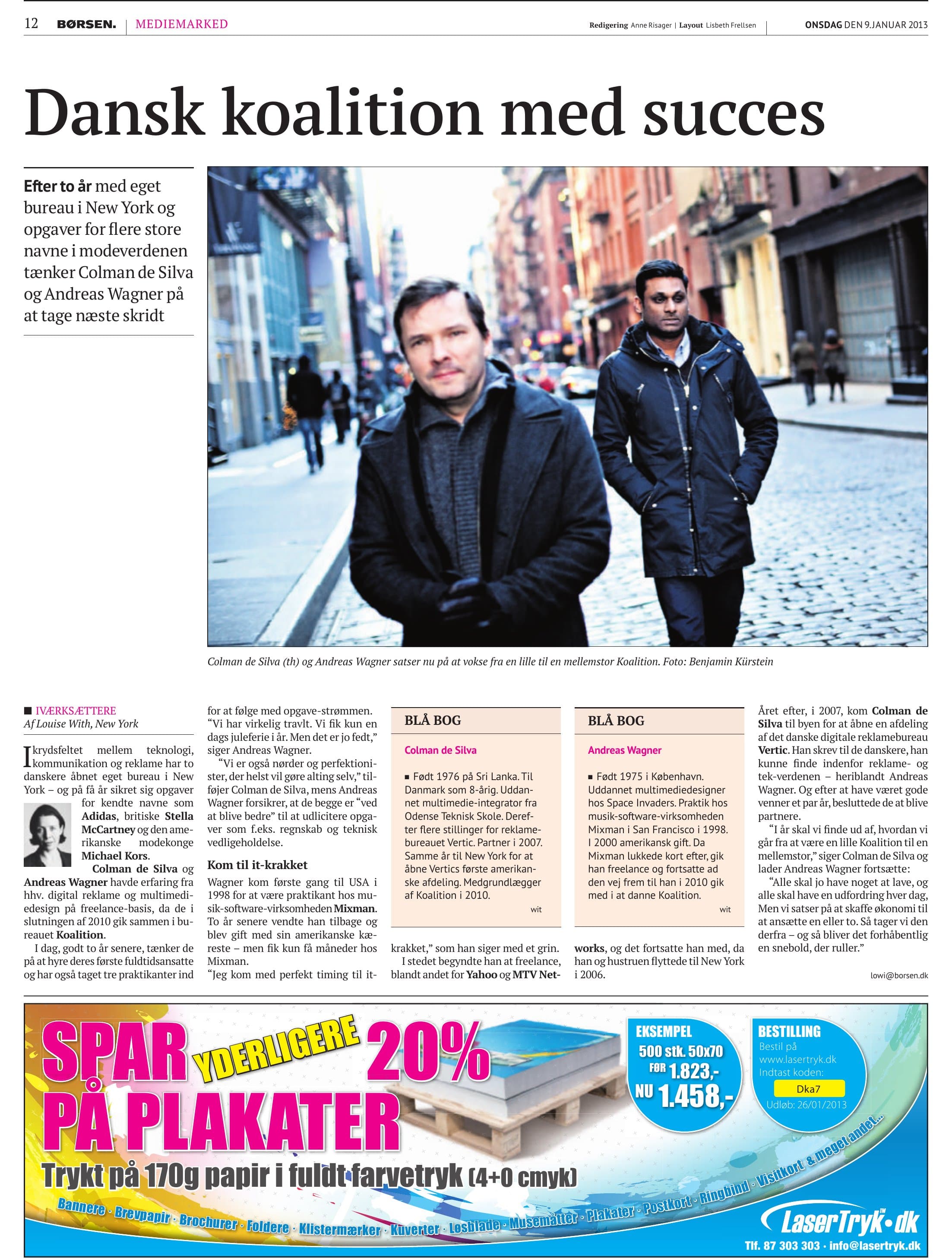
A 6am phone call from Denmark, a national newspaper feature, and an early-Koalition story about what it took to land on page 7 of Børsen from a SoHo studio.
My phone buzzed at 6 AM on a Wednesday in January 2013. It was my brother. Calling from Denmark. At what would be noon his time.
He never calls at noon.
"You're in Børsen," he said. Not a question. A statement of mild disbelief, the same tone he used when I told him I was moving to New York to start an agency with a guy I'd met at a networking event.
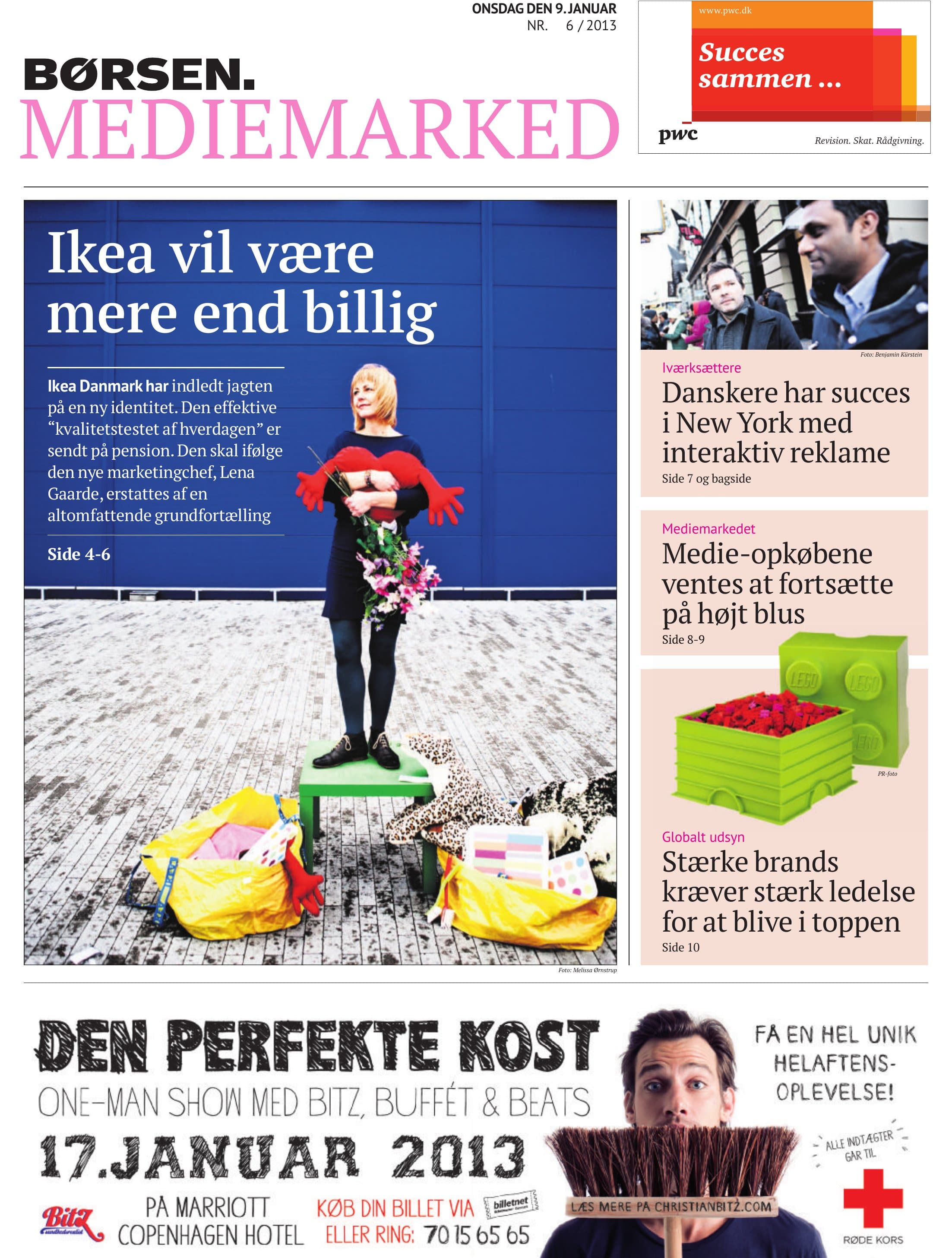
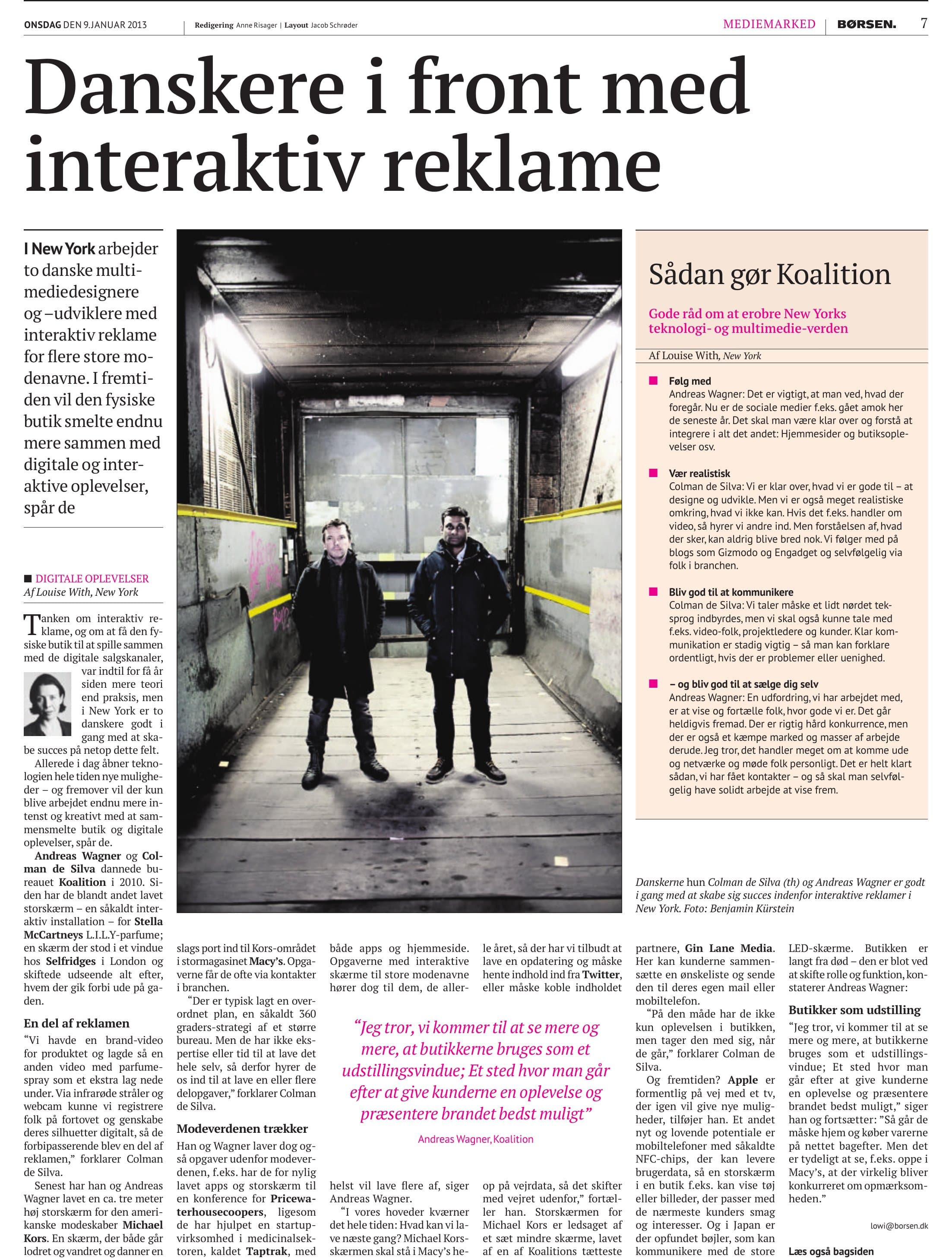
Børsen is Denmark's Financial Times. The paper you see on every executive's desk, in every business lounge at Kastrup Airport. The paper that signals you've made it in the Danish business world. And there we were, Colman and I, on page 7 of the Mediemarked section. Headline: "Danskere i front med interaktiv reklame."
Danes leading interactive advertising. In New York. In 2013.
Building Something From Nothing
We'd been running Koalition for about two years at that point. Two years of saying yes to everything, sleeping very little, and explaining to our families why we'd left perfectly good jobs to build something in a city that didn't know we existed.
The reporter, Louise With, had found us through some contact or another. She wanted to write about Danes doing interesting things in tech and media overseas. We met her at a coffee shop in SoHo and talked about our work: the interactive installation we'd built with Gin Lane for Stella McCartney's L.I.L.Y perfume at Selfridges in London, where passersby on the street became silhouettes integrated into the display. The storefront screen we'd just finished, also with Gin Lane, for Michael Kors at Macy's.
We talked about the future too. I told her I believed physical retail would become more like a showroom, a place for brand experiences rather than pure transactions. Colman explained how we tracked pedestrians with infrared sensors and webcams to create those silhouettes. We probably sounded like two guys who'd had too much coffee.
But she wrote it all down.
Validation and Pressure and Homesickness
There's a particular feeling that comes with being featured in your home country's press while you're trying to make it somewhere else.
It's validation and pressure and homesickness all at once. My family could finally explain to their friends what I did for a living. "He makes big screens for fashion brands" is a lot more digestible than "he runs a digital experience agency specializing in interactive installations and immersive retail technology."
The article ran with a sidebar: "Gode råd om at erobre New Yorks teknologi- og multimedie-verden." Good advice for conquering New York's tech and multimedia world. We gave tips like "follow what's happening" and "be realistic about what you can and can't do." Standard stuff. But the one that stuck with me was Colman's point about communication: We might speak nerd to each other, but we have to speak human to everyone else.
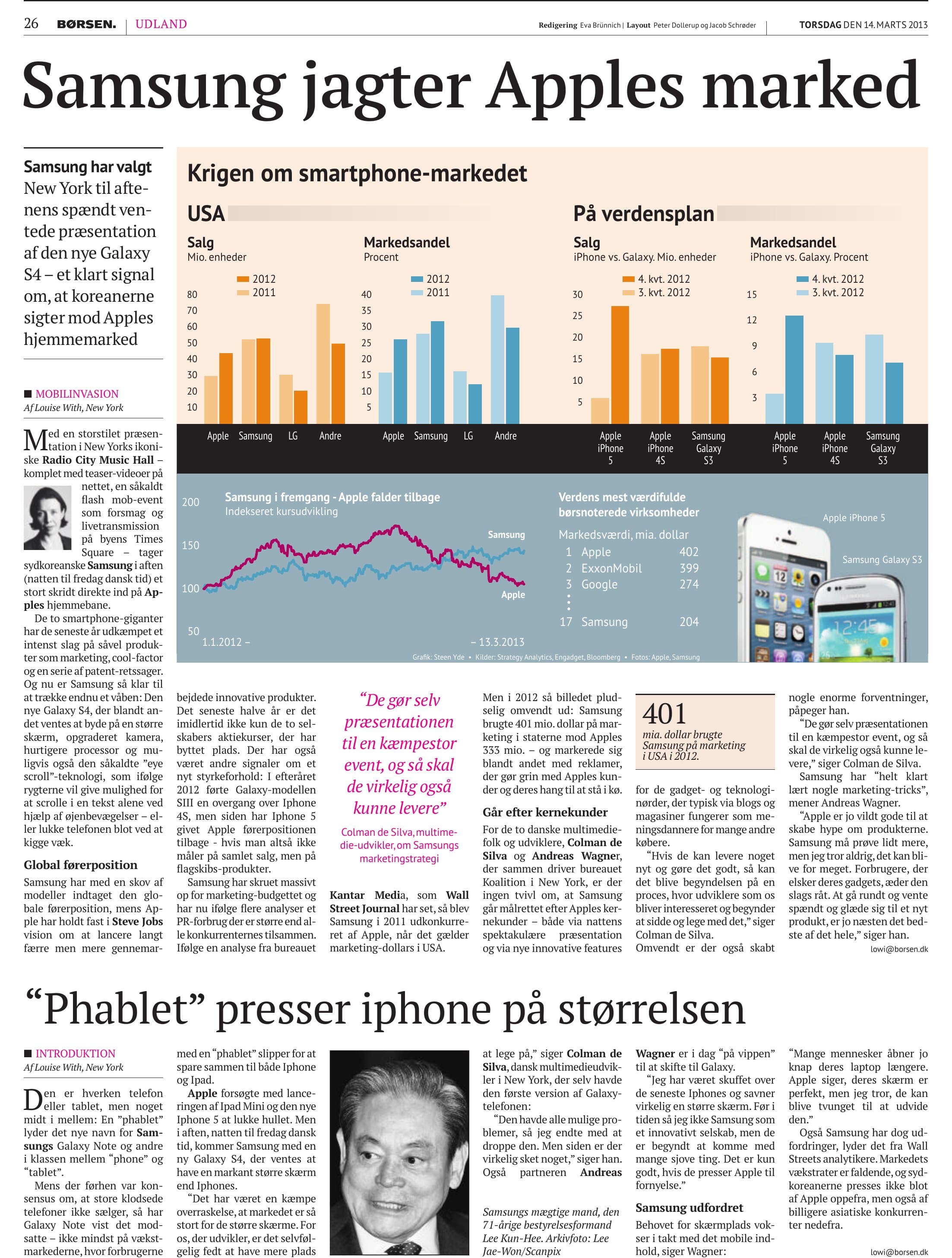
Two months later, Børsen called again. This time they wanted our take on Samsung's big Galaxy S4 launch at Radio City Music Hall. The smartphone wars were at full tilt. Samsung was spending $401 million on marketing in the US alone, trying to out-Apple Apple on their home turf.
Colman gave them a quote that still makes me smile: "They're turning the presentation into a massive event, so they really need to deliver."
Fifteen Years Later
I've been thinking about those articles lately. Not because of nostalgia, though there's that too. But because we're now in our fifteenth year of running Koalition, and the things we were speculating about in 2013 have become the work we do every day.
NFC chips. Screens that respond to who's nearby. Retail spaces designed for experience first, transaction second. We weren't prophets. We were just paying attention.
The interactive perfume display at Selfridges eventually led to museum installations. The Macy's work led to permanent kiosk systems. The "digital showroom" concept we described became the foundation for how we think about every project.
When I look at those old articles now, I see two guys who were working ridiculously hard, had no real safety net, and genuinely believed that the future of physical spaces was going to be more interesting than people expected.
We were right about that part. We were also so, so tired.
What Doesn't Make the Papers
My brother still brings up those articles occasionally. Usually when he's trying to explain to someone back home what I actually do.
What he doesn't have clippings of are the thousands of hours of unglamorous work that came before and after. The client calls at midnight. The prototype that crashed three hours before installation. The projects that never shipped.
But that's not what makes the papers.
Originally featured in Børsen, January 9, 2013.